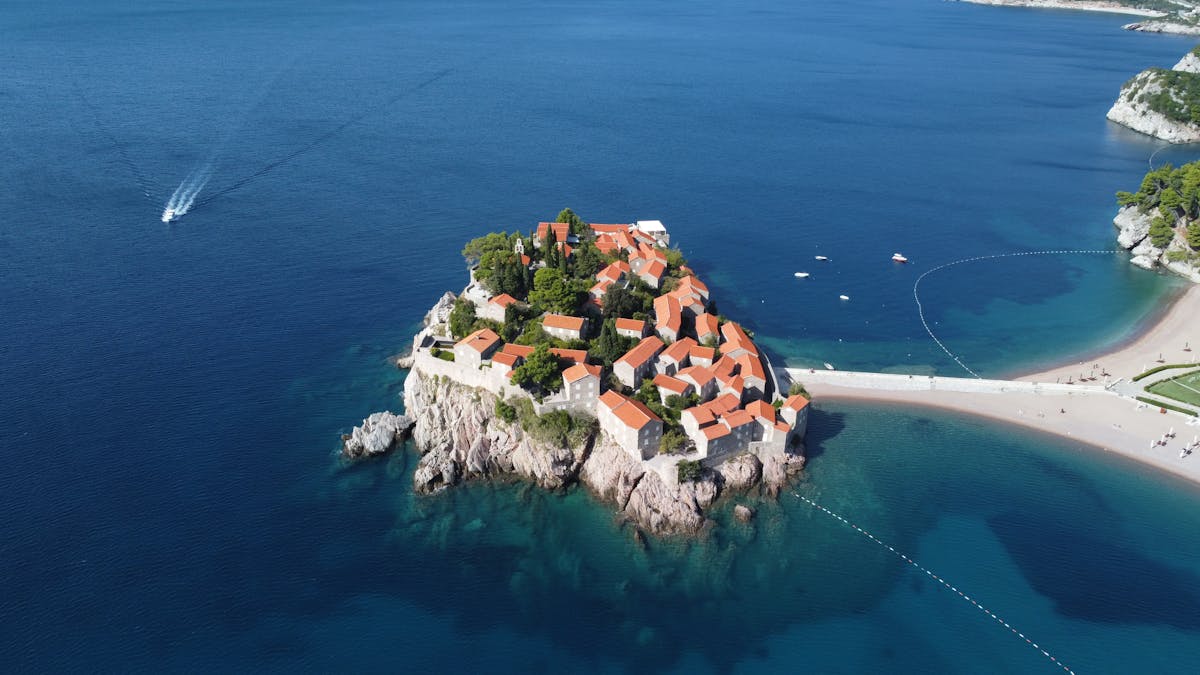
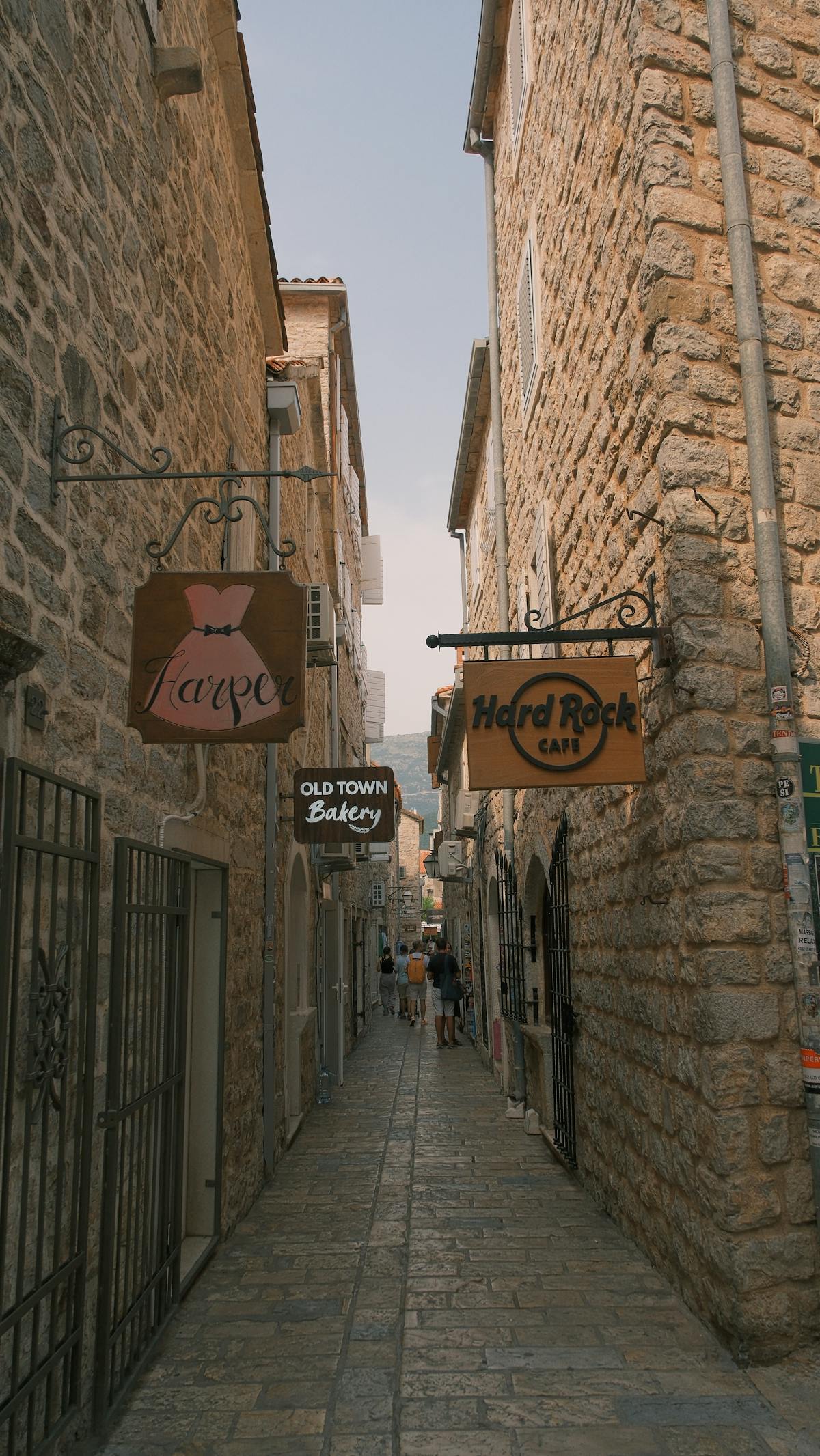
Budva earns its reputation as the nightlife capital of Montenegro by packing a serious density of bars, clubs, and beach venues into a small stretch of coast. The season runs from late May to mid-September, peaking in July and August when international DJs fly in, beach clubs run until dawn, and the Old Town cobblestones are still warm at midnight. Outside of peak season the scene shrinks but doesn't disappear — the Old Town bars stay open year-round and a handful of venues along the promenade keep going through October.
Three Nightlife Zones
The scene splits into three distinct zones, each with its own character and crowd.
Old Town
The narrow lanes inside the walls are where most evenings start. Bars here are intimate — stone-walled rooms opening onto tiny terraces, rooftop cocktail spots with views across to Sveti Nikola island, and wine bars tucked into medieval cellars. The atmosphere is more conversation than dancing. Cocktails run €7–12 depending on the bar and the complexity of the drink. Local beer is cheaper at around €3–4.
Most Old Town bars open by early afternoon and pick up around 8pm. By 11pm the crowd tends to shift toward the promenade or out to the bigger clubs. A few spots stay open past midnight, but the Old Town is at its best between sunset and 11pm.
Slovenska Obala (The Promenade)
The seafront promenade running along Slovenska Beach is the social spine of Budva's summer. Beach bars, cocktail terraces, and open-air lounges line the walkway for over a kilometre. People drift between venues, drinks in hand, from around 9pm until well after midnight.
The promenade bars tend to be louder and more commercial than the Old Town. Music is a mix of international pop, Balkan pop, and electronic depending on the venue. Prices are similar to the Old Town — cocktails €8–12, beer €3–5. Many bars along this strip do not charge entry.
Hillside and Out-of-Town Clubs
The serious nightclubs sit on the hillside above Budva or along the road toward Jaz Beach. These are the large-capacity venues — open-air terraces with swimming pools, bottle service, international DJ lineups, and capacities of 1,000 or more. Top Hill is the most well-known, sitting above the town with panoramic views of the coast. It runs Thursday through Sunday in peak season.
Getting to the hillside clubs requires a taxi (€5–10 from the Old Town) or a shuttle service run by the clubs themselves. Most open around 11pm and run until 4–5am.
The Beach Club Scene
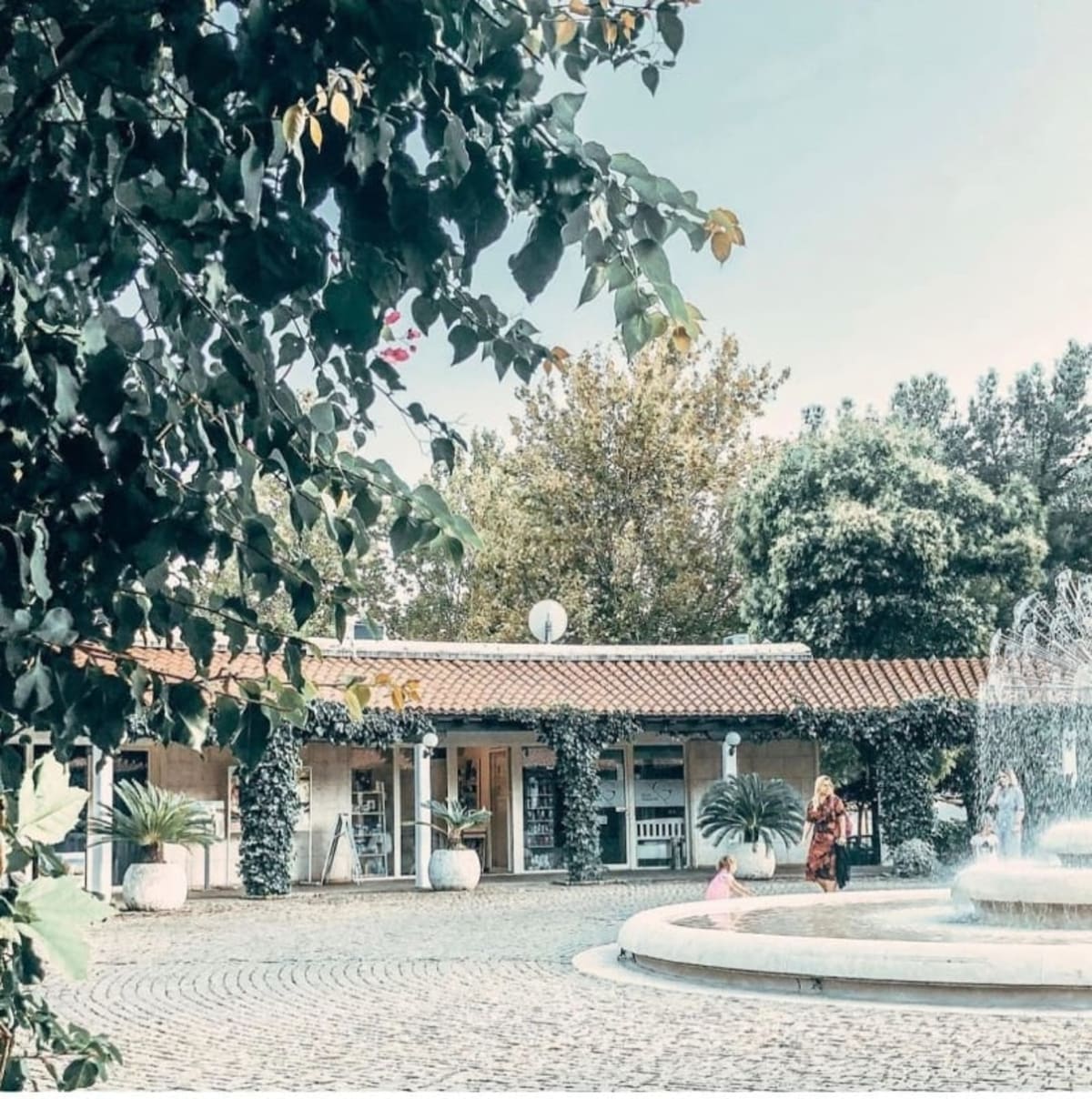
Beach clubs are the main event from late June through August. During the day they operate as premium beach bars — sunbeds, cocktails, music at a conversational level. Around sunset the energy shifts. DJs take over, the volume increases, and by midnight many beach clubs have effectively become nightclubs with sand underfoot.
The biggest beach club stretch runs between Budva town and Jaz Beach. Venues along this coast vary from relaxed lounge-style setups to full production events with light shows and pyrotechnics on weekend nights.
What to expect: Cover charges range from free to €20 depending on the night and the DJ. Table reservations for groups of four or more are common on weekends — these often come with a minimum spend of €100–200 on bottles. Walk-ins are usually fine on weeknights.
Dress code: Smart-casual is the norm at the larger clubs. Swimwear is fine during the day but most venues expect you to change by evening. Trainers are generally accepted but flip-flops are not at the bigger venues.
Drinking in the Old Town
The Old Town is at its best on a warm evening when the narrow streets fill up and every terrace is occupied. A few things worth knowing if you are spending the evening inside the walls.
Happy hours run at most bars between 5pm and 7pm — expect two-for-one cocktails or discounted spritz drinks. It is worth asking, as not every bar advertises the deal.
Rakija is the traditional local spirit — a fruit brandy distilled from grapes, plums, or occasionally pears. It is served as a shot, usually at room temperature. The grape variety (loza) is the most common in coastal Montenegro. If you are offered homemade rakija at a bar, try it — the quality varies enormously and the best are excellent.
Cocktails have improved considerably in Budva over the past few years. Several bars now stock quality spirits and make proper espresso martinis, negronis, and aperol spritzes. The standard is closer to what you would find in Split or Dubrovnik than what it was five years ago.
Wine is worth exploring. Montenegrin Vranac (a bold red from the Skadar Lake region) and Krstač (a dry white) are available at most bars. A glass runs €3–5.
The main square inside the Old Town is the busiest spot, but the atmosphere is often better one street back from the tourist trail — smaller terraces, fewer tour groups, and bartenders who have time to talk.
Live Music and Events
Budva hosts live music throughout the summer, concentrated in the Old Town squares and along the promenade. Open-air concerts and cultural events run in the Citadel courtyard and on the main stage near the Old Town gate. Local bands play covers and Balkan music at several bars — check venue boards for schedules, which change weekly.
The bigger music events happen at Jaz Beach, which has the space for festival-scale productions. Past performers at Jaz include major international acts. Tickets for large events are sold online and at the tourist information office near the marina.
Practical Notes
Getting around at night: Taxis between Old Town, the promenade, and the hillside clubs cost €5–15 depending on distance. In high season (late July, early August) taxis get scarce after midnight — save a local taxi number in your phone before going out, or arrange a pickup time with your driver. Some clubs run free shuttles from the promenade.
Booking: Major clubs sometimes require table reservations on Friday and Saturday in July and August. Most take bookings via Instagram DM or WhatsApp — check the venue's social media for the current booking number.
Peak weeks: The last two weeks of July and first two weeks of August are the absolute peak. Expect larger crowds, higher prices, longer taxi waits, and more energy. If that appeals, book accommodation near the Old Town so you can walk home.
Off-peak: May, June, and September are excellent for a quieter but still-lively experience. The beach clubs thin out but the Old Town bars are more relaxed, cocktails are easier to get, and prices drop noticeably. October is quiet but a handful of bars remain open.
Safety: Budva is generally safe at night. The usual precautions apply — watch your belongings in crowds, stay aware on quieter streets late at night, and drink water between rounds. The police presence increases visibly in peak summer.
See our full nightlife listings for venues, opening times, and contact details.