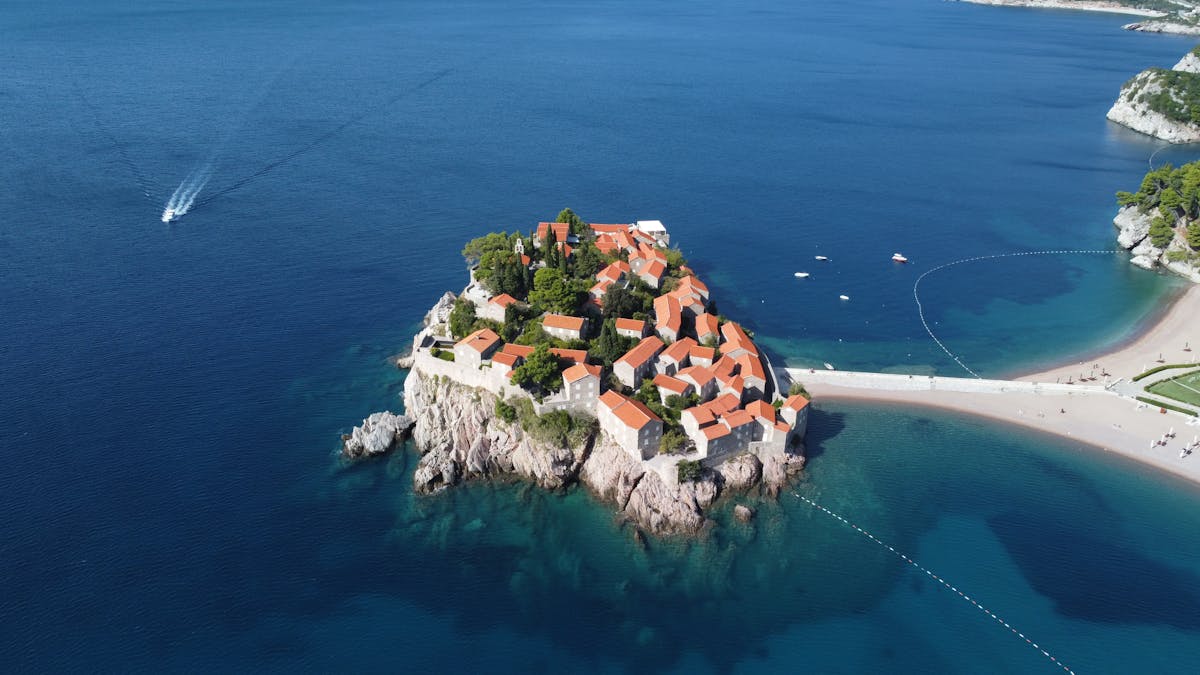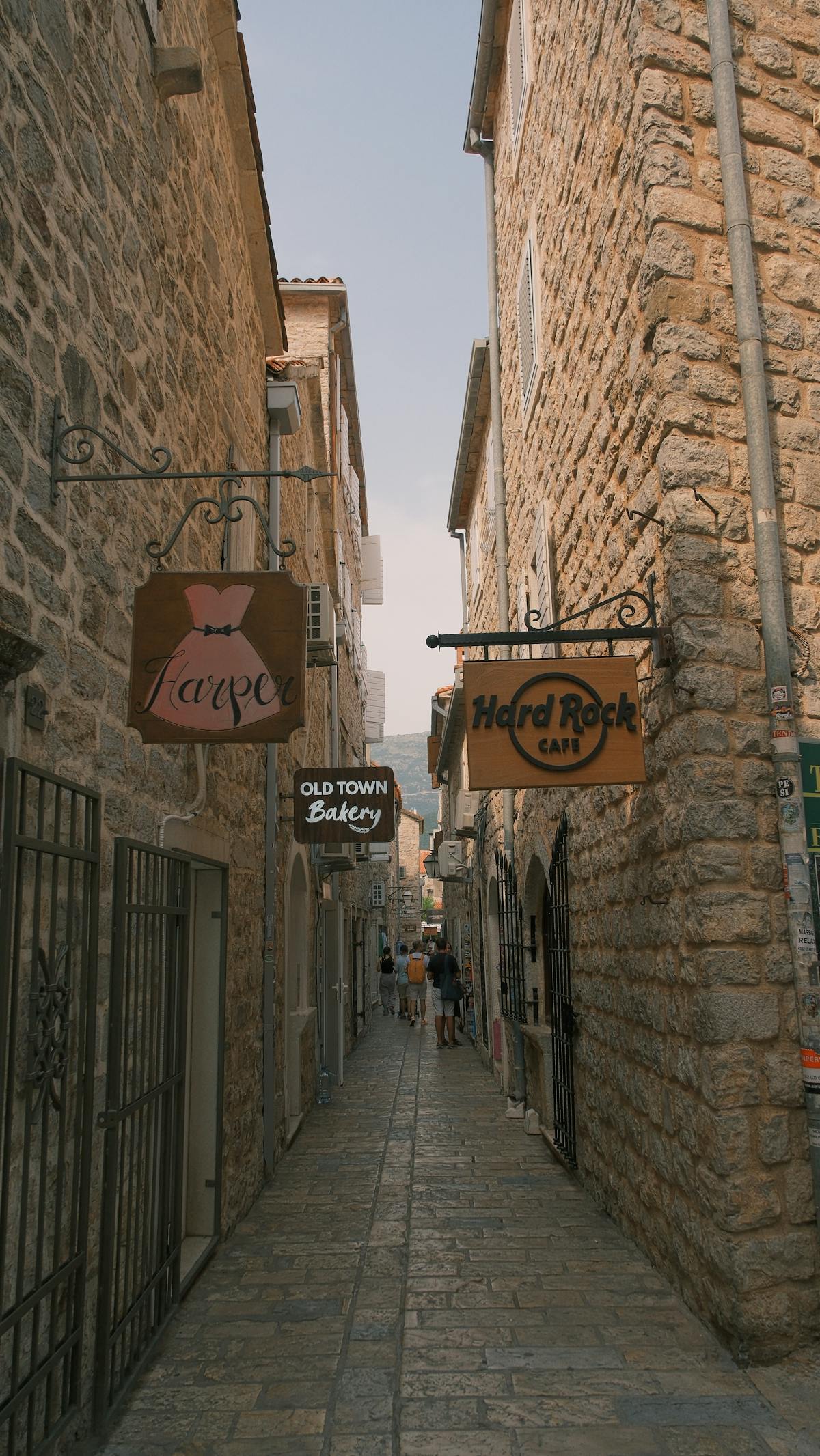
Budva's Old Town is one of the oldest continuously inhabited settlements on the Adriatic — archaeological evidence places the first habitation at over 2,500 years ago. Greeks, Romans, Byzantines, Venetians, Austrians, and finally Montenegrins have all left their mark on this compact peninsula of stone. A devastating earthquake in 1979 reduced much of the Old Town to rubble, but the reconstruction that followed was meticulous — stones were numbered, catalogued, and reassembled over the following decade. What stands today is authentic in plan and material, even if much of the masonry was relaid within living memory.
The entire Old Town can be walked in under an hour, but doing it properly — stopping at the churches, climbing the walls, sitting at a café, looking at the details — is a half-day experience. This guide follows a logical route from the main entrance to the Citadel at the southern tip.
Start at the Main Gate
Enter through the eastern gate on the landward side — the stone archway set into the Venetian-era walls where the Old Town meets the modern promenade. This is the most used entrance and the most dramatic. The walls here are at their thickest, roughly three metres of solid stone, and the gateway has been the primary access point for centuries.
Immediately inside the gate you step into a small square lined with cafés, souvenir shops, and the first of the narrow lanes branching left and right. Before heading deeper, look up and to your left — a stone relief above one of the doorways shows the two fish symbol of Budva, repeated throughout the town. The origin of the symbol is linked to a Greek foundation myth involving two lovers turned into fish by the gods.

The Square Between the Churches
Walk straight ahead from the main gate and within a minute you reach Trg Između Crkava — the square between the churches. This is the heart of the Old Town and the site of its three most important religious buildings, standing within 30 metres of each other.
The Church of St. John (Sveti Ivan) dominates the square with its bell tower — the tallest structure in the Old Town and visible from across the bay. The church dates from the 7th century, though it has been rebuilt and modified many times. The bell tower is a later Venetian addition. Inside, the church houses an icon of the Madonna in Punta, an object of particular local devotion.
The Church of Santa Maria in Punta sits just south of St. John's and dates from 840 AD, making it one of the oldest surviving buildings on this stretch of coast. It is tiny — no more than 10 metres long — and functions today as an exhibition space rather than an active church. The stonework is original in places and you can see where the earthquake damage was repaired.
The Holy Trinity Church completes the trio, recognisable by its distinctive alternating bands of pink and grey stone. It was built in 1804 in the Serbian Orthodox tradition, considerably newer than its neighbours. The interior contains frescoes and a gilded iconostasis.
The square itself is the social centre of the Old Town — restaurants set out tables here in the evening, and in summer it functions as an open-air dining room surrounded by medieval architecture.
The Citadel
From the square, walk south through the lanes toward the tip of the peninsula. The Citadel sits at the southernmost point, a fortification built by the Venetians in the 15th century and modified by the Austrians in the 19th.
The entrance fee is around €3.50 and gives access to the ramparts, a small library containing a collection of old maps and books, and an open terrace with what is arguably the best panoramic view in Budva. From the Citadel walls you can see Sveti Nikola island directly ahead, the beaches of Bečići stretching east, and on clear days the mountains of the Montenegrin interior behind the town.
Timing: Come early morning (before 10am) or in the late afternoon (after 5pm) for the best light and the fewest people. The Citadel faces south and gets full sun through the middle of the day — in July and August it is uncomfortably hot between noon and 4pm.
The terrace café inside the Citadel sells drinks and light snacks. It is one of the most pleasant places in Budva to sit with a coffee and a book.

The Sea Walls
From the Citadel, you can access sections of the fortified walls that encircle the Old Town. The south-facing stretch above the sea is the most rewarding — narrow stone steps lead up to a walkway with views across to Sveti Nikola and down to the rocky bathing platforms below.
The wall walk is not a complete circuit. You can cover roughly half the perimeter on the seaward side before the path ends and you need to descend back into the lanes. The stone is uneven and there are no railings in most sections, so watch your step and wear proper shoes. Flip-flops are a bad idea on the walls.
From the western section of the walls, you get a direct view down to Ričardova Glava beach — the small bathing spot directly beneath the Old Town. On summer afternoons you can watch swimmers from directly above.
Hidden Details Worth Finding
The Old Town rewards slow looking. Beyond the main sights, there are small details throughout that most visitors walk past.
The fish carvings near the eastern gate are the most famous, but there are others embedded in walls and lintels throughout the town. Some are medieval, others added during the post-earthquake reconstruction.
Washing lines stretch between the upper floors of buildings in the residential lanes. The Old Town is not a museum — around 300 people still live here permanently. The laundry, the cats sleeping on doorsteps, the old men playing cards at a café table — these are as much a part of the Old Town as the churches.
The Roman mosaic is displayed in a small exhibition space near the eastern gate. It was discovered during the earthquake reconstruction and shows geometric patterns typical of a Roman villa. It is easy to miss — look for a small sign at street level.
Gallery spaces occupy several former houses and ground-floor shops. Some show contemporary Montenegrin art, others sell tourist-oriented prints and photographs. The quality varies but there are a few serious galleries worth a look.
The Clifftop Path to Mogren
If you exit the Old Town through the western gate (or simply walk around the outside of the walls heading west), you reach the start of the clifftop path to Mogren Beach. The path is concrete and railed for most of its length, hugging the rock face above the sea. It takes about five minutes to walk and passes a bronze statue of a dancer on the rocks — another frequently photographed Budva landmark. Mogren Beach itself is a rewarding destination, with clear water and a rock tunnel connecting its two coves.
When to Visit
The Old Town is open year-round and free to enter — there is no gate charge, only the Citadel charges admission. In summer the lanes fill with visitors from mid-morning to early evening, peaking between 11am and 3pm when tour groups and cruise ship excursions arrive.
For the quietest experience: Visit before 9am or after 7pm. Early morning is particularly good — the light is soft, the lanes are empty, and you can hear the sound of the sea from inside the walls.
Summer evenings bring a different atmosphere — live music in the squares, restaurants lit by candles and string lights, the smell of grilling fish mixing with salt air. The Old Town is at its most atmospheric between 8pm and midnight in July and August.
Winter is quiet but has its own character. The restaurants that stay open serve mainly locals, the lanes are empty, and you can photograph the architecture without anyone in the frame.
Explore our full attractions listings for opening times, maps, and visitor details.